
Global Coffee Roundup: October 8–14, 2025

October's been a wild ride for coffee lovers and traders alike. From record-breaking prices that've got everyone talking to exciting developments right here in India, this month's delivering more drama than your favorite afternoon espresso shot. Let's dive into what's shaking up the coffee world from São Paulo to Sakleshpur. This roundup covers the week of October 8–14, 2025.
Market Mayhem: Prices Hit Sky-High
If you've been wondering why your local café's prices seem steeper lately, you're not imagining things. Coffee prices have rocketed to 25-year highs this month, with Arabica futures soaring past $4 per pound. That's the kind of number that makes both roasters and coffee shop owners do a double-take.
The culprit? It's the perfect storm we've been watching build for months. Severe weather in Brazil and Vietnam has squeezed supply just when global demand's showing no signs of slowing down. Add tariff pressures and supply chain hiccups to the mix, and you've got a recipe for price volatility that's keeping everyone on their toes.

What's really got the industry worried are the inventory numbers. Arabica stocks have plummeted to just 534,665 bags by early October – that's down from over 716,000 bags in late August. We're talking about a 1.5-year low here, and when coffee stocks get this tight, markets get nervous fast.
Even the big chains are feeling the pinch. Starbucks has bumped their large hot coffee to around $3.25, with lattes now starting at $5.25. It's a reminder that when coffee prices move, they ripple through the entire supply chain.
Production Paradox: Records and Warnings
Here's where things get interesting. Colombia just reported its best harvest in decades – great news, right? Well, sort of. In the same breath, they're warning about a potentially lower 2025/26 crop. It's the kind of mixed signal that perfectly captures how unpredictable coffee production has become.
The global picture's equally complex. World coffee production for 2025/26 is forecast to hit a record 178.7 million bags, thanks to recovery in Vietnam and Indonesia, plus record output from Ethiopia. But here's the catch – with global consumption projected at 169.4 million bags, ending inventories are expected to stay painfully tight at just 22.8 million bags.
Meanwhile, South Korea's experiencing an import surge as the country responds to these global price fluctuations. It's a smart move that shows how savvy coffee markets are adapting to supply uncertainty.
Innovation Brewing: New Players Enter the Game
Despite all the market turbulence, innovation hasn't slowed down. Indonesia's Indomaret just launched their Point Coffee ready-to-drink line, introducing three flavors that sound absolutely tempting: Aren Latte with palm sugar, Golden Caramel with A2 milk, and Creamy Cappuccino. They're expanding from in-store cafés to retail shelves nationwide – a move that shows how RTD coffee continues to capture market share.

This kind of innovation reflects broader trends we're seeing globally. Gen Z consumers are driving demand for convenience without compromising on quality, and brands are responding with products that deliver both. The RTD coffee segment's growth story is far from over.
Industry Events: Where Coffee Meets
October's been packed with major industry gatherings. World Coffee Expo Asia 2025 just wrapped up in Bangkok (October 15-17), featuring over 400 exhibitors with a laser focus on sustainability innovations. These events are crucial for understanding where the industry's heading, especially as sustainability becomes non-negotiable for coffee brands worldwide.
The Global Coffee Awards also crowned the best roasters in the US and Canada, with the European competition set for late October in Bordeaux. It's always exciting to see which roasters are pushing boundaries and setting new standards for quality.
Looking ahead, World Coffee Research scientists will gather from October 27-31 at the 30th ASIC conference in Lisbon. When the world's top coffee researchers get together, you know breakthrough discoveries aren't far behind.
India Spotlight: GI Tag Game-Changer for Karnataka
Now for the news that's got us particularly excited here at Woodpeckers – Karnataka's making moves that could reshape Indian coffee's global reputation. The Coffee Board's pushing for a Geographical Indication (GI) tag for Hassan coffee, specifically covering the Sakleshpur and Belur regions.
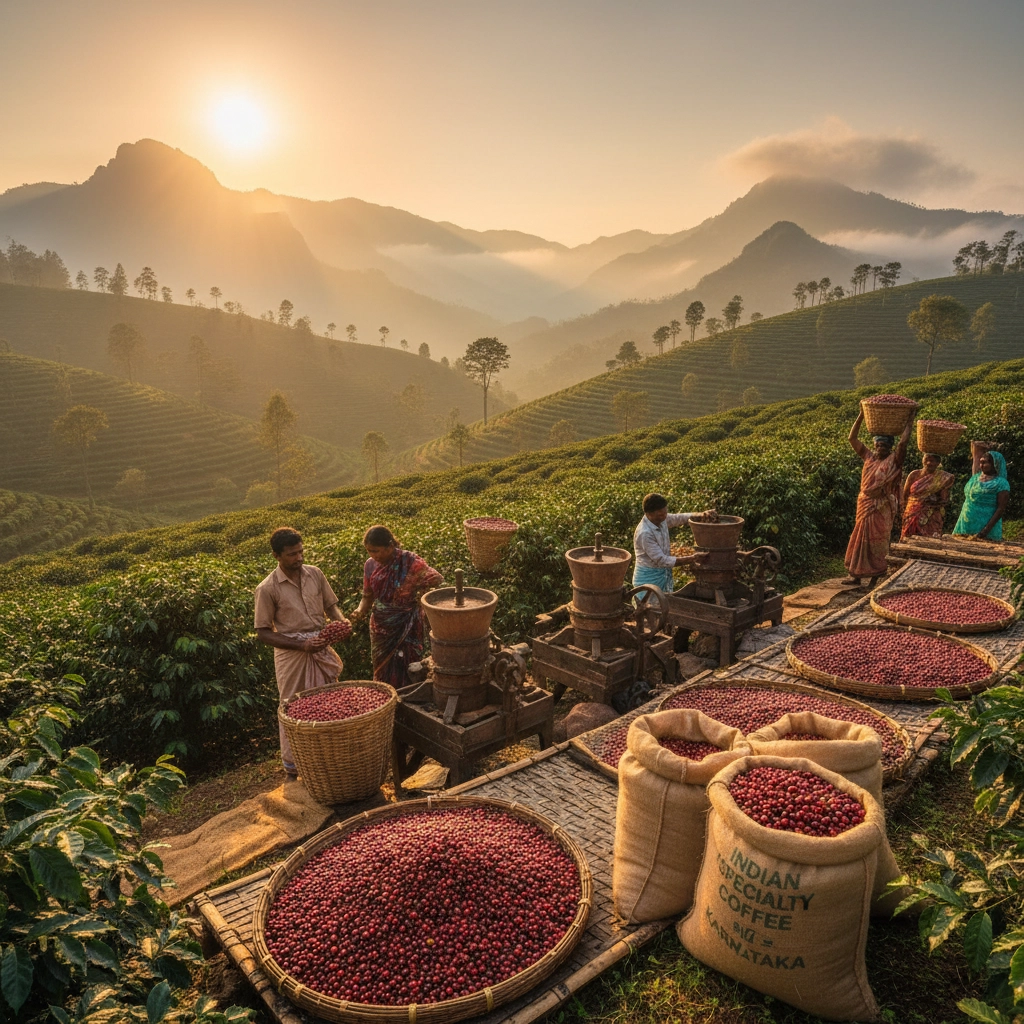
This isn't just bureaucratic paperwork – it's potentially transformative for local farmers and the entire region. A GI tag would officially recognize the unique characteristics of Hassan coffee, from its distinctive flavor profile developed by the region's specific climate and soil conditions to the traditional processing methods that have been refined over generations.
For farmers in Sakleshpur and Belur, this could mean premium pricing and direct access to specialty coffee markets that value authenticity and origin stories. It's the kind of recognition that puts these regions on the global coffee map in a whole new way.
The Coffee Board of India's been particularly active on social media this week, highlighting not just the GI tag developments but also showcasing the incredible diversity of Indian coffee. Their Instagram's been featuring everything from traditional processing methods in Karnataka to innovative brewing techniques that young Indian coffee enthusiasts are embracing.
What's especially encouraging is how they're connecting traditional coffee culture with modern coffee trends. It's not just about preserving heritage – it's about making Indian coffee relevant and exciting for a new generation of coffee lovers.
Supply Chain Jitters Continue
The International Coffee Organization's composite price index tells the story in stark numbers – it's increased over 90% in the last two years. That's not just market volatility; it's a fundamental shift that's forcing everyone in the coffee supply chain to rethink their strategies.

For traders and roasters, this means getting creative with sourcing and building more resilient supply relationships. For coffee shops, it's about finding ways to maintain quality while managing costs. And for consumers, it's adjusting to a new reality where great coffee commands premium prices.
Looking Forward: Sustainability in Focus
What's encouraging amid all this market uncertainty is how sustainability continues to drive innovation and investment. The Bangkok expo's focus on sustainable solutions shows that the industry isn't just thinking about immediate challenges – it's building for a more resilient future.
From water-saving processing methods to carbon-neutral shipping solutions, sustainability isn't just a buzzword anymore. It's becoming the foundation for how successful coffee businesses operate.

The Bigger Picture
As we wrap up October and look toward the rest of 2025, one thing's clear – the coffee industry's in a period of fundamental change. High prices, tight supplies, and evolving consumer preferences are creating challenges, but they're also opening opportunities for innovative businesses and dedicated coffee professionals.
For those of us in the coffee trade, it's about staying agile, building strong relationships across the supply chain, and never losing sight of what matters most – delivering exceptional coffee experiences to the people who depend on us for their daily fuel.
The coffee world's complex, unpredictable, and sometimes frustrating. But it's also endlessly fascinating, constantly evolving, and full of passionate people doing remarkable work. That's what makes these monthly roundups such a pleasure to write – there's always something new brewing in the world of coffee.
Comments