
Global Coffee Weekly Roundup: March 3, 2026
- ADITYA Kumar
- Mar 4
- 5 min read

Hey there, coffee lovers and industry friends. It’s Tuesday, March 3, 2026, and it’s time for our weekly deep dive into everything happening in the world of beans, brews, and business.
I’m sitting here at the Woodpeckers Coffee Trading House headquarters, looking at the latest market reports and thinking about how much the landscape has shifted just in the last few months. If you’ve been following our previous roundups, you know we’ve been riding a bit of a price rollercoaster.
The big news this week? We’re seeing a bit of a "cool down" in prices, some major digital moves in Southeast Asia, and a shift in how farmers are processing their cherries in East Africa. Grab your favorite mug: ideally filled with some of our ground coffee: and let’s get into it.
The Market: Arabica Finds a New Baseline
If you’ve been watching the C-market lately, you’ll notice that Arabica futures are hovering around the $2.80/lb mark. Now, compared to the wild $4.23 peaks we saw back in November 2025, this feels like a bit of a breather.
Why the downward pressure? It all comes down to the giants in the room. Brazil is looking at a massive crop forecast. When the world’s largest producer signals a "bumper crop," the market usually reacts by trimming off the "scarcity premium." While $2.80 still isn't "cheap" by historical standards, it’s a lot more manageable for roasters than what we were seeing at the turn of the year.

The "Brazil Effect": 66.2 Million Bags
Let's talk about that Brazilian forecast. Conab (Brazil’s national crop forecasting agency) just released figures projecting a record-breaking 66.2 million bags for the 2026/27 harvest. To put that in perspective, that’s a lot of espresso.
The breakdown looks like this:
44.1 million bags of Arabica.
The rest is made up of Robusta/Conilon.
Beneficial rainfall in Minas Gerais: the heart of Brazil’s coffee country: has been the primary driver here. When the trees are happy, the market gets a little more relaxed. However, we’re still seeing "backwardation" in the futures market. This is just a fancy way of saying that while things look good for the long term, short-term supplies are still a bit tight. If you’re a roaster, the advice right now is to keep your inventory coverage steady but don't panic-buy.
Vietnam: The Digital Race Against Deforestation
Over in Vietnam, the world’s Robusta powerhouse, the focus isn't just on volume; it’s on compliance. The EU Deforestation Regulation (EUDR) is a looming reality, and Vietnam is racing to meet the requirements.
This week, we’ve seen a massive rollout of new digital traceability tools. Thousands of smallholder farmers are being onboarded onto platforms that track the exact plot of land where each cherry was grown. This isn't just about paperwork; it's about proving that coffee production isn't contributing to forest loss.
Vietnam’s exports have been surging lately, helping to fill the gap left by other regions, but the long-term success of their coffee sector now depends on these "digital passports." It’s a huge shift for traditional farming communities, but it’s a necessary step for global market access.
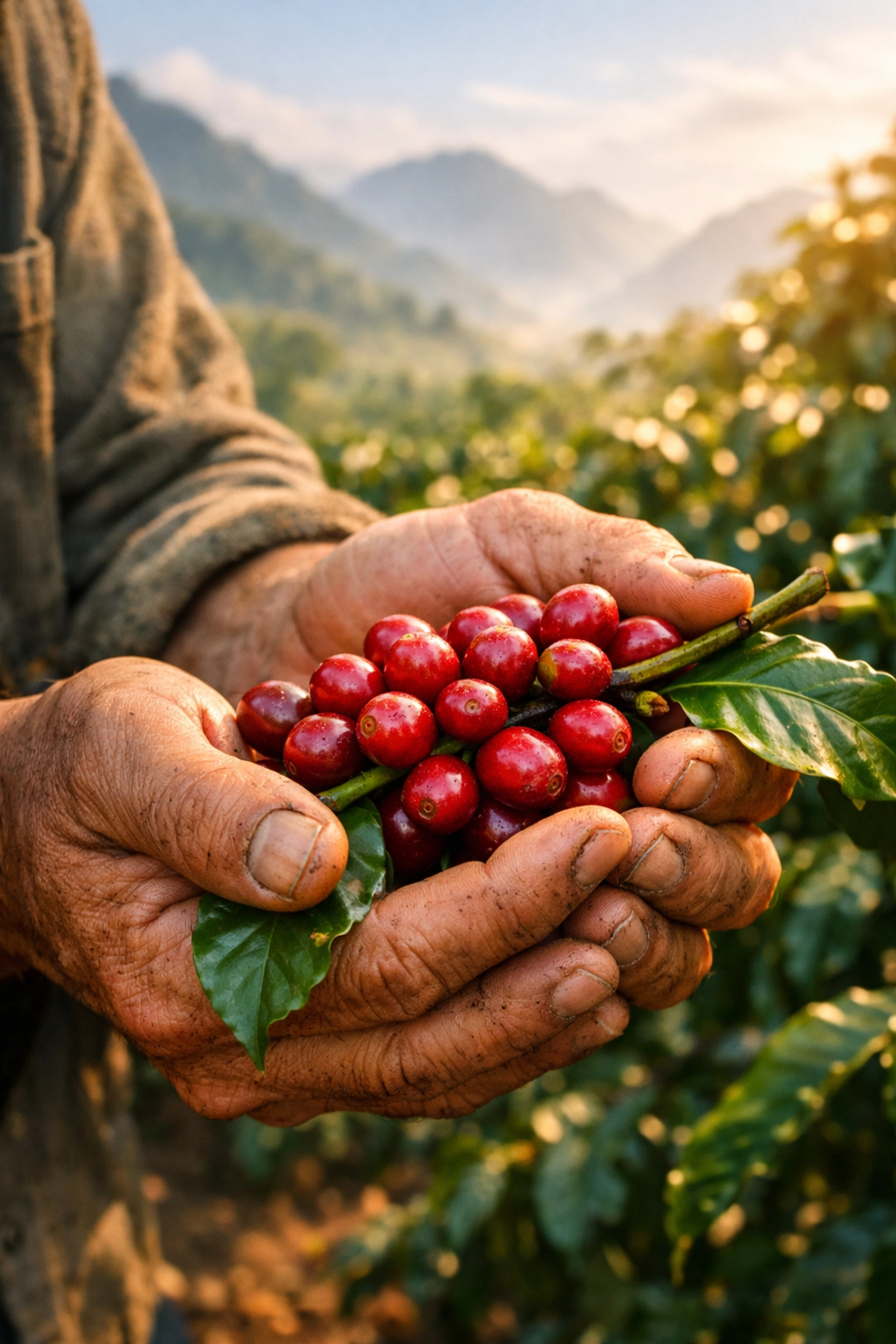
Ethiopia: The Rise of the Naturals
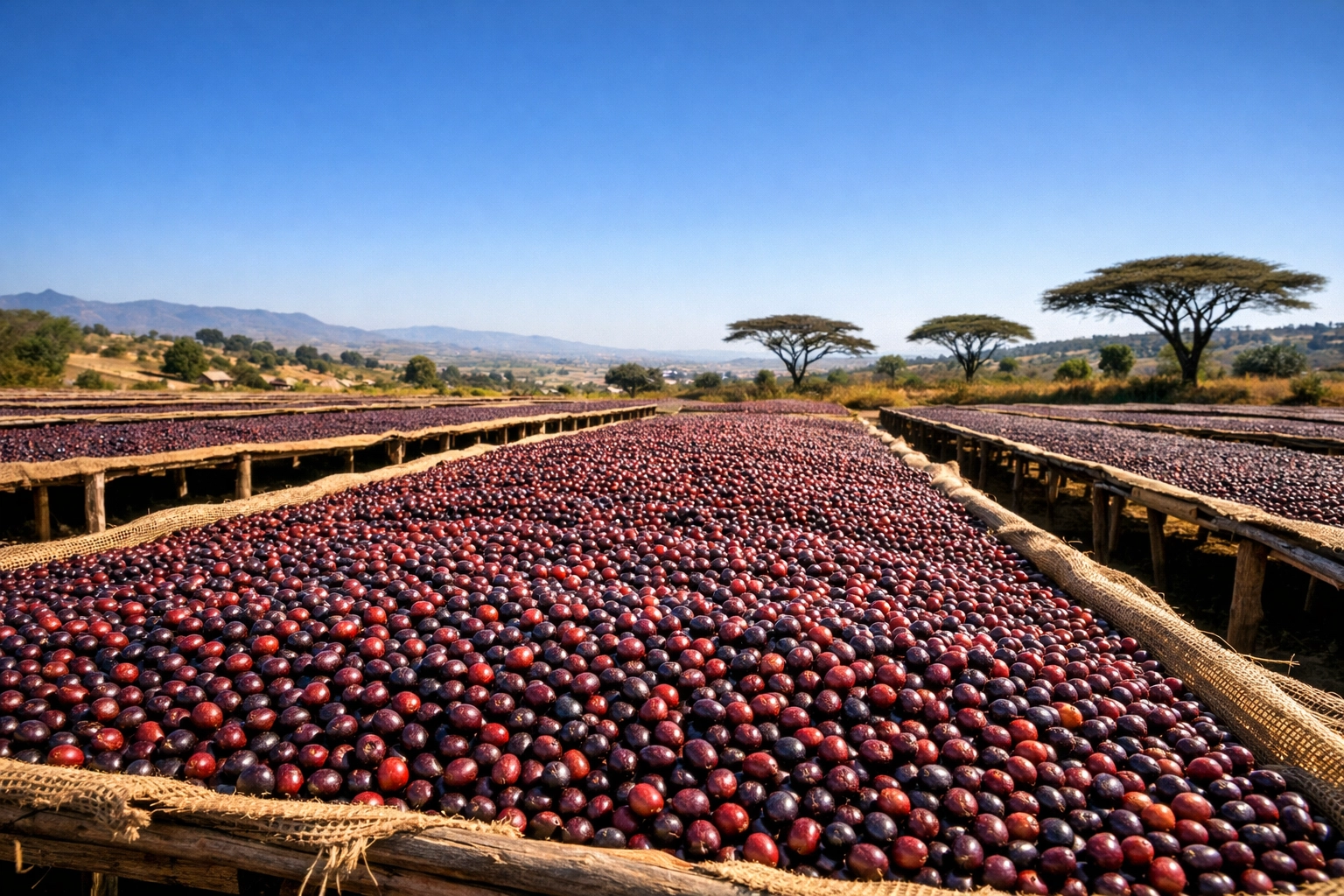
Ethiopia is seeing something fascinating right now. Record-high cherry prices at the farm gate are actually changing the way coffee is processed.
Traditionally, washed coffees from regions like Yirgacheffe or Sidamo have been the gold standard for many specialty roasters. But with cherry prices so high, more farmers and washing stations are pivoting toward natural processing (drying the whole cherry).
Why? Because natural processing often requires less immediate infrastructure and water, and with prices where they are, farmers want to get their product to market as efficiently as possible while maintaining those high margins. For us at Woodpeckers, this is particularly interesting because we’ve always been big fans of the natural method: it brings out that deep, fruit-forward complexity that we love in our Araku Valley beans.
A Quick Tour of the Top 15 Producers
Beyond the "Big Three," here’s what’s happening on the ground elsewhere:
Colombia: Production is steady, though slightly lower than last year’s exceptional peak. Quality remains high.
Indonesia: Sumatra is still in a slow recovery phase after the devastating cyclone in late 2025. Supplies are tight, and prices for Giling Basah (wet-hulled) coffee remain premium.
Honduras: Reporting healthy supplies. They’re becoming an even more vital player for North American roasters looking for value.
India: Our home base! In the Araku Valley, the weather has been kind. We’re sticking to our 100% natural, organic approach, and honestly, the consistency we’re seeing in the cup this year is some of our best yet.
Uganda: Robust Robusta exports are helping balance the global shortage.
Mexico: Focus remains on domestic consumption growth, which is eating into export volumes.
Guatemala: High altitudes are producing some stellar microlots this month.
Nicaragua: Stable production, with a focus on regenerative agriculture.
Peru: Seeing increased interest from buyers looking for organic-certified Arabica.
Tanzania: Getting ready for the harvest season; expectations are cautiously optimistic.
Costa Rica: Still the leaders in processing innovation (honey, anaerobic, etc.).
El Salvador: Small volumes, but incredibly high quality this cycle.
Upcoming Events: Where the Industry Meets
If you’re looking to network or see the latest in brewing tech, there are two big dates for your calendar:
Coffee Fest New York (March 8-10): This is always a high-energy event. Expect to see a lot of talk about automation in milk steaming and the continued rise of "cold foam" tech. If you’re in the area, it’s worth a visit just to see where the retail trends are headed.
Roast Summit Melbourne: Later this month, some of the world’s best roasters will gather in Australia to discuss heat profiles, energy efficiency, and the science of the "crack." Melbourne is arguably the coffee capital of the world, so the insights coming out of this will be top-tier.
The Woodpeckers Perspective: Consistency in Chaos
You might look at these global shifts: price drops in Brazil, digital tracking in Vietnam, processing changes in Ethiopia: and feel a bit overwhelmed. We get it. The coffee world is complicated.
But at Woodpeckers Coffee Trading House, our philosophy remains minimalist and grounded. While the world chases the latest market trend, we stay rooted in our Araku Valley origins. Our commitment to 100% natural and organic coffee isn't just a marketing buzzword; it's our way of ensuring that no matter what the C-market does, the quality in your cup stays the same.
We’re seeing more people move toward the "natural" approach: whether it’s for environmental reasons or taste preferences: and it feels good to know we’ve been on that path since day one. If you want to dive deeper into our story, you can check out our blog or see our latest news.
Wrapping Up the Week
As we look toward the rest of March, expect the market to stay in this $2.75–$2.90 range unless there’s a major weather event in South America. The "supply scare" of 2025 is largely behind us, and we’re moving into a phase of "normalization."
For the average coffee drinker, this is good news. It means your favorite local shop (hopefully us!) can focus more on the craft and less on the fluctuating cost of green beans.
That’s it for this week’s roundup. Stay caffeinated, stay curious, and as always, keep it natural.
Cheers,
The CEO Woodpeckers Coffee Trading House
Want to stay updated every week? Bookmark our Coffee Roundup category and never miss a beat. If you're interested in partnering with us, check out our dropshipping options or make a reservation to visit us.
Comments